
Literature, Nostalgia, and Making Sense of Our Lives
Sean Glatch | January 5, 2026 |
One of my favorite reads last year was My Salinger Year by Joanna Rakoff, a memoir which, apparently, also had a movie adaptation.
Rakoff explores her first year out of grad school, in the mid-1990s, in which she worked as an assistant in a literary agency—the one that represented J. D. Salinger. And the memoir is certainly about Salinger, his literary mythos, and how singular our relationships to literature are. But it is also about literary New York City, and about the world on the cusp of the digital revolution, in which the ways we relate to one another would be forever transformed by the internet.
I was born a few years after the events of this memoir. So it surprised me most how nostalgic I was for mid-90s Manhattan. I never experienced it, but I have inklings of what it was like to live in the world before screens dominated everything. And of course, there’s nothing romantic about Rakoff’s struggle—making poverty wages, living in a rundown apartment with a neglectful boyfriend, all her creative energy consumed by an unrewarding job—but something gorgeous glimmered through the pages. Perhaps the patina of meaning that narrative gives to our lives; perhaps that sense of sky-seeking optimism assigned to the 1990s.
The events of the memoir are as follows:
- Rakoff, upon finishing grad school, moves to New York City to work for an unnamed literary agency, always referred to as The Agency. (A quick Google search reveals the agency is Harold Ober Associates.) Around the same time, she meets her Communist-chic boyfriend and moves in with him to a rundown apartment in Williamsburg, Brooklyn—back before the neighborhood was pricey/trendy.
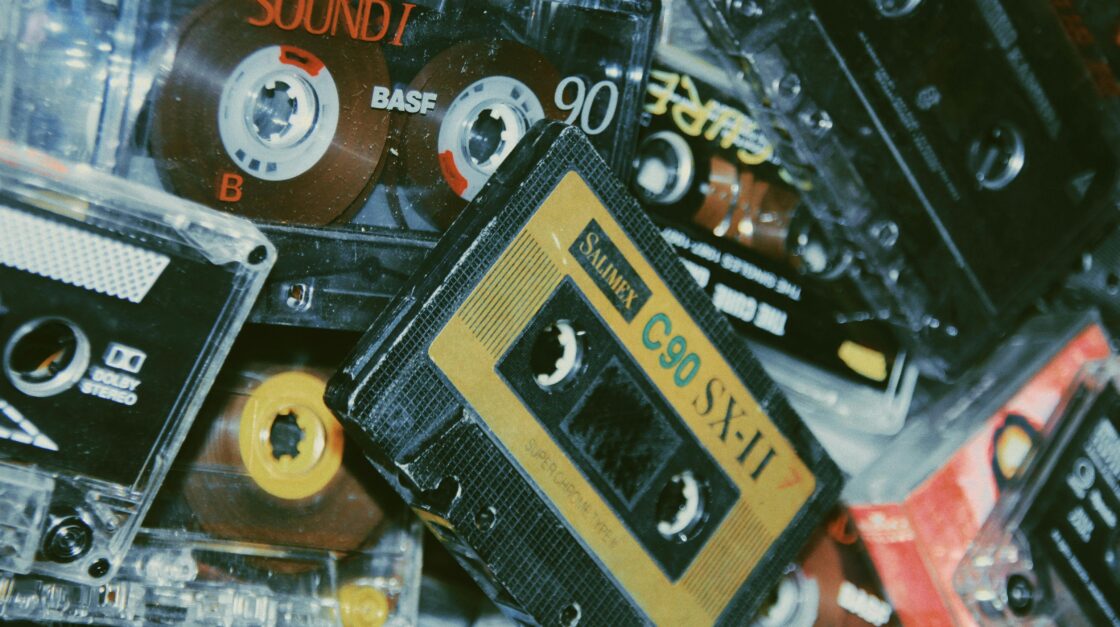
- At The Agency, Rakoff mostly accomplishes menial tasks: transcribing her boss’ audio recordings with an old cassette player; resetting the margins on literary contracts. She also reads the fan mail that Salinger’s fans send to Salinger, and responds to those letters on behalf of The Agency—telling fans, gently, that Salinger refuses all of the fan mail he receives and will not respond.
- Throughout much of the memoir, The Agency is occupied with Salinger deciding to republish one of his short stories with a random independent publisher, facilitating both Salinger’s quirks and idiosyncrasies, and the publisher’s own ineptness.
- Rakoff, moved by how many fans reveal their personal lives in their writings to Salinger, eventually sends back personalized messages, telling teenagers “it gets better” and the like. (These people, angry that Rakoff wrote back instead of Salinger, write Rakoff mean-spirited and malicious letters in return.)
So it’s not a memoir with a rich, high-intensity plot. But I couldn’t stop reading it. Rakoff is a great storyteller, but what kept me glued to the work was its sheen of nostalgia, and the proximity I have to this life I could have lived, but didn’t.
I was born too late for a 20th-century literary life. The internet had consumed literature well before I made it to college, and now, the literary world is defined just as much by Salinger, Hemingway, Fitzgerald, and Woolf, as it is defined by Twitter feuds and rejection emails from literary journals. Forgive my cynicism, as the internet has done some great things for literature: it feels more democratized, and new modes of literary experimentation have mushroomed from these new avenues of connection and creation. (Nonetheless, I think writers write better when they can properly unplug.)
I don’t know how Rakoff feels about modernity. But I do feel nostalgia pulsing in the work. It’s hard not to romanticize your 20s, so long as you came out successful on the other end of them. That struggle of establishing yourself in the world feels meaningful, not least because you persisted through poverty and hunger, condescension and anonymity, loneliness and loss. Nostalgia becomes narrative’s companion: as Rakoff’s story makes sense of that strange, chaotic year, nostalgia makes that year seem better than it was. How good it feels, then, to know the struggle was worth something.
Nowadays it feels different. I’m a little older than Rakoff is in her memoir, but I moved to New York around the same age, and my experience of these years has been markedly different. Rakoff knows everyone on her block, devours literature in the quiet hours, meets editors from The New Yorker at random house parties. My neighborhood feels defined by anonymity, my phone disturbs me any time I read, and I’ve been to many house parties, but none have connected me to The New Yorker.
But then, this is also nostalgia at work. Rakoff makes clear that she barely ate during her Salinger Year, and she found herself growing further apart from her friends and family. I’ve been eating quite well, thankfully, and I feel the closest I’ve ever felt to the people in my life. But I long for the disconnect of the 90s: the ability to leave your home and not be located; the strange charm of the Xerox machine, the Fax, the tape recorder.
I also long for a culture in which you don’t have to share every thought you have online, in which privacy is valued, in which the self is not constantly mined for content. I know, both statistically and personally, that the 90s were not as glamorous as history makes them seem—but no period of my life stands out quite like Rakoff’s Salinger Year does, and if I tried to write a memoir about a single 12 months of my life, I wouldn’t know which to choose.
Love Letters to the Past + Writing Prompts
Our memories are deeply imperfect. As we age, we tend to remember the worst things of the present, the best of the past. We also think we remember parts of the past perfectly, but we never do. I have a solid memory, but I’ve learned not to trust it too deeply: the gap between history and truth is usually my own psychology.
I run a poetry writing group here in New York, and the theme of a summer workshop was Nostalgia. Coincidentally, many of the poets in the room each grew up in Anytown, USA, defined more by suburbanness than urbanness, and so the poems we all wrote recurred with suburban imagery: basketballs beating the sidewalks, glittering swimming pools, those long summer sunsets radiating the leaves, the trees, the soft gray concrete. We all knew something that went unspoken: our childhoods were defined by loneliness, by lack. (Why else would we become poets?) We also knew that those years meant something, we just struggled to find the meaning.
Nostalgia comes from the Greek: nostos, “returning home,” and algia, “pain.” Is it the returning home that’s painful, or is pain the home we return to? We could feel tenderness pulsing in our hippocampi. We tried to thumb the bruise.
How do you write the past without romanticizing it? The curse of narrative is that it both reveals and obscures. Falsehoods can seem just as true as the truth when the facts are set down linearly—but the facts are never linear.
All creative nonfiction writers must separate what’s gospel from what’s grandeur. Nostalgia offers us windows into the pain, but we still have to interrogate that pain to understand it, not just accept what nostalgia tells us.
Prompts on Nostalgia
Here are a few prompts for you. Use them as doorways into new essays or sections of memoir, but also, use them as opportunities to dig past the pain and come away with insight.
1. What period of your life do you find yourself nostalgic for? Write about the parts of this period that nostalgia obscures: the things that were painful; the ways you had to change.
2. What is a life you’ve never lived, but long for anyway? What is romantic to you about that life? What meaning does it carry? First, answer those questions.
Then, once you figure out the meaning of this imagined life, try to identify where that same meaning show up in the life you currently live.
3. Make a list of scenes, images, people, and activities that evoke a sense of nostalgia for you. Fill this list with concrete details.
Then, write an essay in which all of these listed elements make an appearance.
Finally, reread the essay, with attention towards the narrative that emerged from the arrangement of those elements. Which parts of the essay are false, even though they feel true? What details did you omit? Revise the essay by acknowledging what you left out if it—or, start a new essay about those omissions.
4. Write about a period of your life that you miss. Treat that period of time as a symbol, as representative of something you once had but now no longer have. What is it that you really miss?
5. If nostalgia means “returning home + pain,” write an essay in which you try to find the (metaphorical) home your pain resides in.

Well Sean, you’ve done it again. I think I’ll spend this year working through these prompts. I’ll let you know if I come out alive.
I’m floored The New Yorker has not discovered you! If they don’t snatch you up to be a staff writer soon, I may cancel my subscription. (Oh wait. I don’t have one.) May luck & pluck be with you throughout 2026. (The words “Happy New Year” feel cynical to me in this day & age—speaking of nostalgia.)
Many thanks for your always kind readership, Karen—may 2026 be your most poetic yet!